
Health Care Matters | February 27
Health Care Affordability and Drug Pricing Elevated in State of the Union Remarks
In recent State of the Union remarks, health care affordability and prescription drug pricing were elevated as central federal policy priorities. The speech emphasized rising costs as a strain on families and employers and highlighted drug pricing as a key lever for reducing overall health spending, positioning affordability as a major theme in upcoming federal policy discussions. While many of the proposals referenced would require legislative or regulatory action to advance, the messaging signals continued federal attention to drug pricing and cost containment, alongside ongoing debate over the balance between federal intervention and market-based approaches in addressing cost pressures. Read more here and here.
Why It Matters
Health care affordability continues to shape the national policy conversation, and renewed federal attention to drug pricing suggests pharmacy costs will remain a focal point for policymakers, payers, and providers alike. Even without immediate legislative change, shifts in federal tone and priority can influence payer strategies, contracting dynamics, and expectations around pricing transparency and patient-facing cost tools. For organizations operating in value-based care arrangements, the emphasis on affordability reinforces the need to integrate pharmacy strategy into total cost of care models while balancing access, quality, and financial sustainability; although the path from federal messaging to concrete policy action remains uncertain, organizations that can clearly demonstrate value, outcomes, and cost management will be better positioned to adapt as policy direction evolves.
Look for the Helpers: Strengthening the Public Health Workforce Through Shared Expertise
The CDC Foundation is expanding its Workforce Acceleration Initiative, adding a new cohort of state, local, and Tribal public health agencies focused on strengthening data infrastructure and technical workforce capacity. The initiative places data and technology experts within health departments to help modernize systems, improve interoperability, and accelerate projects that historically took years to complete. This latest expansion includes new collaborative models that allow multiple agencies, particularly in rural and Tribal-serving regions, to share talent and resources, helping smaller jurisdictions access expertise that would otherwise be difficult to recruit or sustain. It’s a reminder that behind many public health improvements are teams quietly building the infrastructure and workforce needed to support faster, smarter decision-making. Read here.
What We're Listening To
Unpacking the ACCESS Model
A recent Health Tech Nerds Radio episode features a conversation with Jacob Shiff of CMMI discussing the new ACCESS Model, including how it builds on prior accountable care models to strengthen provider accountability, address health disparities, and align payment incentives around total cost of care. The episode offers insight into how CMS is thinking about model design, participation requirements, and long-term sustainability as the Innovation Center’s portfolio continues to evolve. Listen here.
What We Are Reading
New Issue Brief: H.R. 1 and the Changing Landscape of Care for Older Adults
A recent article by Aurrera Health Group explores how proposed HR 1 provisions could reshape care for older adults, outlining potential impacts on benefit design, payment models, and long-term services as the policy landscape continues to evolve. Read here.
Data Curation Best Practices and Innovations for Real-World Evidence Generated Using Electronic Health Record-Sourced Data
The Duke-Margolis Institute for Health Policy highlights emerging best practices for curating EHR-derived data used in real-world evidence, focusing on standardization, transparency, and innovations that can strengthen data quality for research and policy decisions. Read here.
Accountable Health Communities (AHC) Model Evaluation
A CMS evaluation conducted by RTI International examines outcomes from the Accountable Health Communities Model, offering insights into how addressing health-related social needs may influence utilization and care delivery. Read here.
Artificial Intelligence in the Clinic: Don’t Pay for the Tool, Pay for the Care
A recent NEJM Catalyst article argues that in clinical settings the value of artificial intelligence tools comes not from the technology itself but from how they are integrated into care delivery to improve outcomes and support clinical decision-making, echoing a broader shift toward evaluating AI by its impact on care rather than its novelty. Read here.
Annual Renewal Considerations in the Medicare Shared Savings Program (MSSP)
A Milliman analysis examines annual renewal decisions in the MSSP, outlining how choices around beneficiary assignment, early renewal, and track selection can materially influence shared savings opportunities and long-term participation strategy for ACOs. Read here.
What We're Attending
Innovation in Behavioral Health (IBH) Model Cohort II NOFO Webinar
The CMS Innovation Center will host a webinar on March 5, 2026, from 2:00–3:00 PM ET to discuss the IBH Model Cohort II Notice of Funding Opportunity. The session will cover model payment methodology, federal award details, and the application process, and will feature insights from Cohort I state awardees in Michigan, New York, and South Carolina on their implementation experiences. Register here.
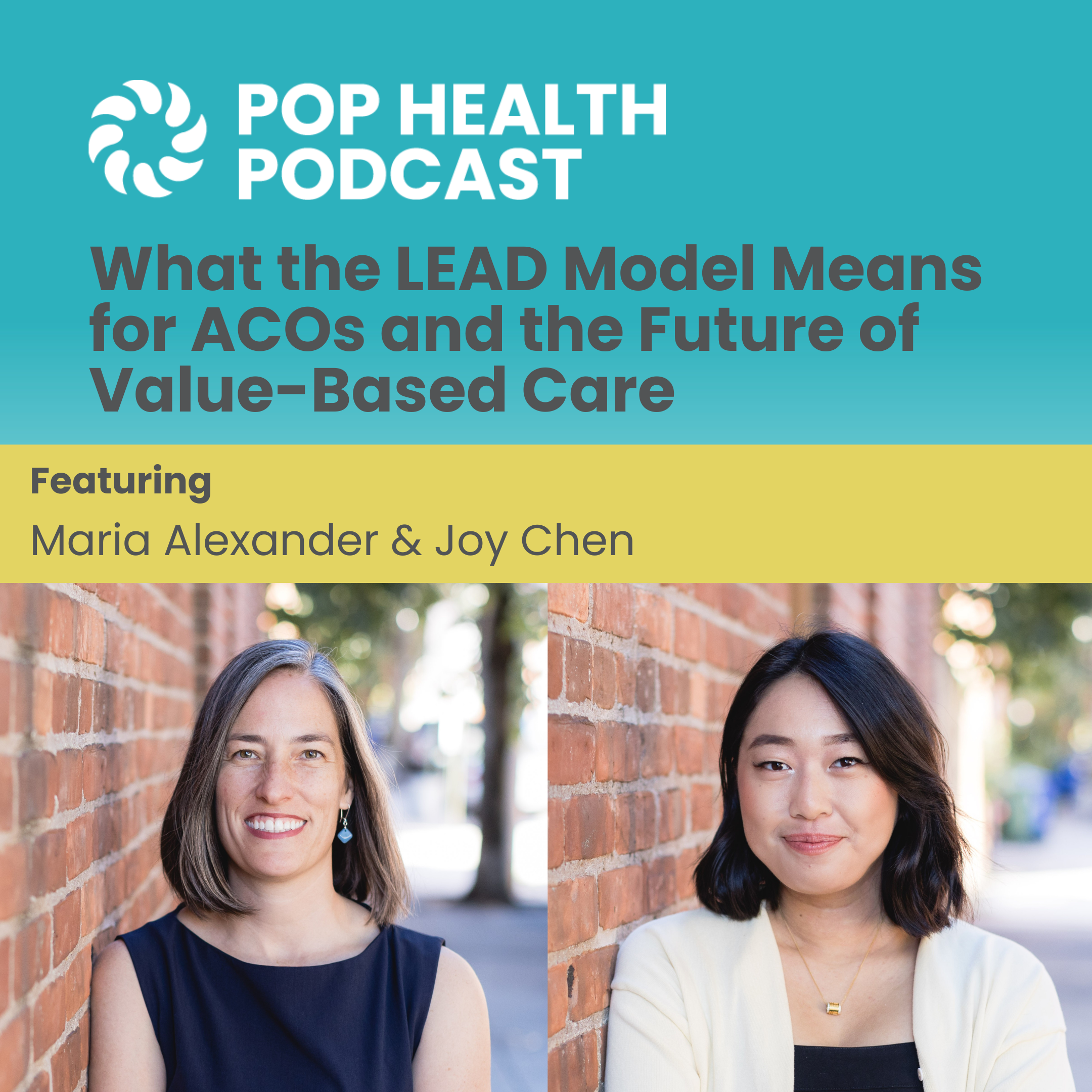
Pop Health Podcast
What the LEAD Model Means for ACOs and the Future of Value-Based Care
In this episode, Melissa Cohen, Founder of Coral Health Advisors, is joined by Maria Alexander, EVP & Partner, and Joy Chen, Director, to unpack CMMI’s newest accountable care model — LEAD (Long-term Enhanced ACO Design). Together, they explore how LEAD builds on MSSP and ACO REACH, what’s actually new (and what’s familiar), and how ACOs should start thinking about readiness, risk, and strategy ahead of a potential 2027 launch.