
Health Care Matters | June 5
Why We’re Going Rural This Week
Rural health is often discussed through statistics: hospital closures, workforce shortages, longer travel times, and persistent health disparities. Those challenges are real, but they only tell part of the story.
For years, we’ve worked alongside rural providers, health systems, state agencies, and community leaders across the country. What stands out most is not the challenges themselves, but the creativity, resilience, and commitment we see in the people working to solve them. Rural communities are often the first to test new approaches, build unlikely partnerships, and find practical solutions with limited resources.
That is one reason we wanted to dedicate this issue to rural health transformation. Across the country, states are beginning to put Rural Health Transformation Program (RHTP) funding into action, while providers continue adapting to changing demographics, workforce realities, and financial pressures. The decisions being made now will shape access to care in rural communities for years to come.
We hope this collection of articles, resources, and stories offers useful perspective on where rural health stands today and where it may be headed next. Most importantly, we hope it serves as a reminder that behind every policy discussion, funding opportunity, and transformation effort are communities working every day to ensure their neighbors can access the care they need.
-Meg Koepke and Melissa Cohen
States Move From Rural Health Funding Awards to Implementation
RHTP is moving out of the abstract and into state-level implementation. The $50 billion, five-year program will distribute $10 billion annually to approved states from fiscal years 2026 through 2030, with funding intended to support rural access, service quality, primary care, value-based care models, provider collaboration, and long-term sustainability. At the same time, early reporting is showing the limits of what the program can solve. In North Carolina, one rural health system receiving first-year funding said the money cannot be used to reopen a closed rural hospital, a reminder that transformation funding may not translate neatly into restoration of lost services.
States are now beginning to build the infrastructure around their awards. Mississippi has launched a Rural Health Transformation Program Office and website within the governor’s office, while Alabama is holding workshops across the state for rural providers and stakeholders interested in future funding opportunities. Idaho’s experience adds another layer: federal officials have told state lawmakers that there is little flexibility in the award timeline, leaving the state to move quickly while still sorting through how to turn broad federal goals into workable local investments. Read here, here, here, and here.
Why It Matters
A large federal investment doesn't automatically translate into the kind of help rural communities are actually asking for. As North Carolina's experience already shows, RHTP funding can't reopen a closed hospital, and that gap between what the money can do and what communities need is where things get complicated. States across the country are now being handed fixed timelines, federal guardrails, and the expectation of "transformation" while simultaneously fielding requests from communities that just want their hospital back, their specialist back, their labor and delivery unit back. Mississippi, Alabama, and Idaho are just a few examples of states working through what it actually looks like to turn broad federal goals into local realities. Whether this program moves the needle on rural health long-term will depend less on the dollar amount and more on whether states can build something durable before the clock runs out.
Look for the Helpers: New Mexico Expands Debt Repayment to Support Rural Physicians
New Mexico is expanding a medical school debt repayment program to help address physician shortages in underserved and rural communities. By reducing the financial burden of medical training, the program aims to make it more feasible for doctors to practice in areas where access to care is already limited. It is a practical workforce strategy, but also a human one: helping clinicians stay in communities that need more consistent, local access to care. Read here.
New Resource
Coral Health Advisor’s Rural Health Transformation Program Tracker
Coral Health Advisors has launched a new tracker to help organizations monitor RHTP activity across states. The tracker brings together state updates, procurement opportunities, webinars, deadlines, and other key developments in one easy-to-navigate dashboard, with filters and preferences that allow users to focus on the states and topics most relevant to their work.
Learn more about the RHTP tracker in this product demo.
If you have any questions or would like to learn more about subscription options, please don't hesitate to reach out at info@coralhealthadvisors.com
What We Are Reading
Delays in Visa Program Threaten Placement of Hundreds of Doctors in Underserved Areas
KFF Health News published an article that examines growing delays in the federal visa waiver process that allows international physicians to practice in underserved communities, creating uncertainty for hospitals and clinics that rely on these providers to help address workforce shortages. Read here.
Maternal Health Innovations Through the Rural Health Transformation Program
A Manatt Health article explores how states could use Rural Health Transformation Program funding to strengthen maternal health access in rural communities, including investments in workforce, care models, transportation, telehealth, and regional partnerships. Read here.
Rural Health Care Infrastructure: Trends and Considerations
Brookings recently published an analysis that examines how rural health care infrastructure has changed over time, highlighting the growing role of outpatient services, workforce challenges, financial pressures, and the continued importance of local access points beyond the traditional rural hospital. Read here.
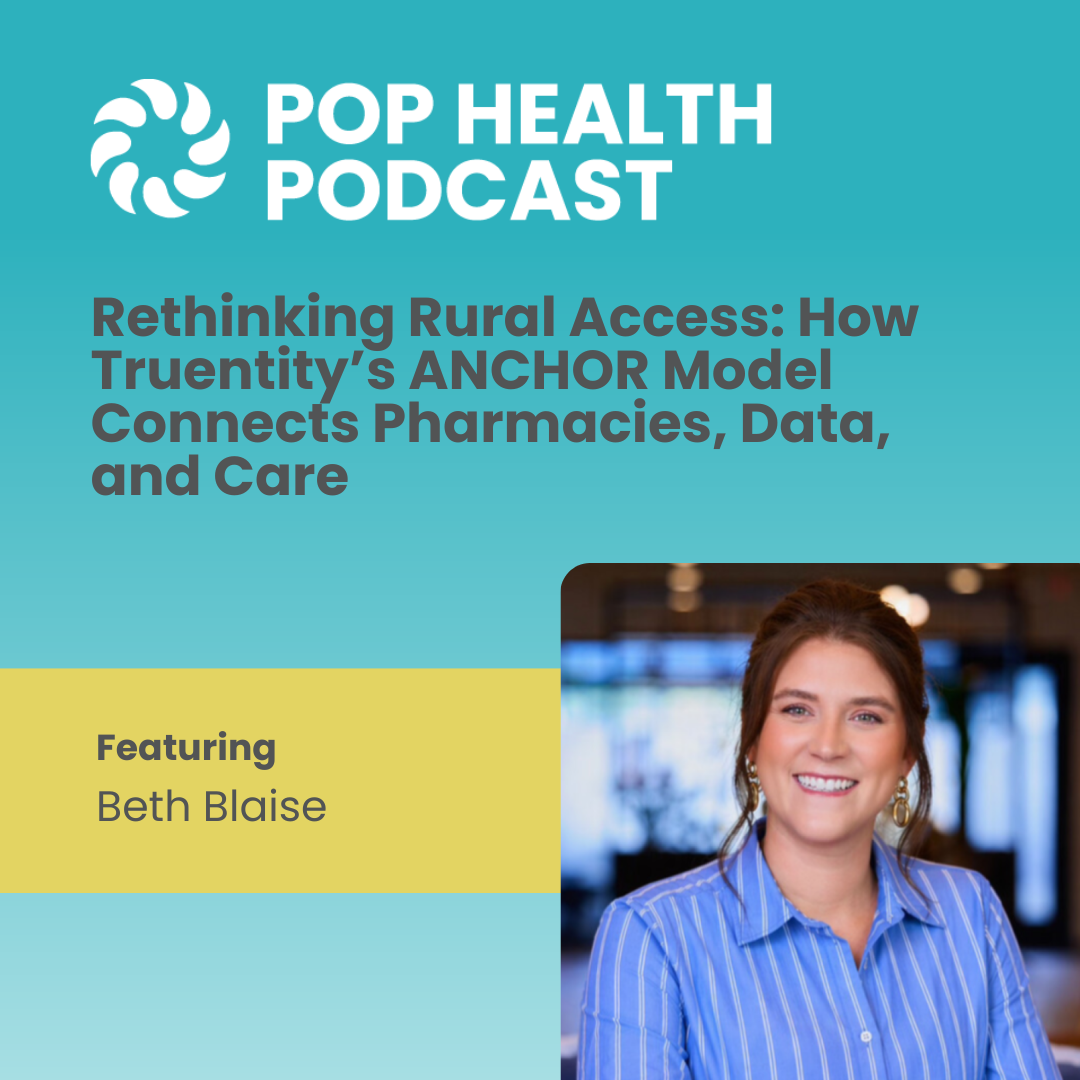
Pop Health Podcast
Rethinking Rural Access: How Truentity’s ANCHOR Model Connects Pharmacies, Data, and Care
In this episode of Bright Spots, Coral’s Kate Freeman speaks with Beth Blaise, MPA, Director of State Programs at Truentity Health, about how Truentity’s ANCHOR model is expanding access to care in rural and underserved communities. Their conversation explores the role of community pharmacies, connected health infrastructure, and coordinated care in addressing gaps in chronic disease management and rural care access.