
Health Care Matters | October 2
Final CJR Evaluation Shows $180 Million in Medicare Savings Ahead of Nationwide Expansion
The Centers for Medicare & Medicaid Services (CMS) released the final evaluation of the Comprehensive Care for Joint Replacement (CJR) Model, finding that the model generated $180 million in Medicare savings while maintaining quality of care. CJR held hospitals accountable for spending related to joint replacement procedures and the 90-day recovery period that followed, encouraging greater coordination with physicians and post-acute care providers. Hospitals reduced unnecessary post-acute care, increased use of home-based recovery, and placed greater emphasis on discharge planning and patient education. CMS will build on these results through the mandatory, nationwide CJR Expanded (CJR-X) Model beginning in 2028. Read here.
Why It Matters
BPCI Advanced adds to the evidence that episode-based payment can reduce Medicare spending when providers are accountable for the cost and quality of care across an entire episode, rather than only for individual services. The findings are especially relevant as CMS shifts from voluntary bundled payment models toward mandatory participation through TEAM. BPCI Advanced also shows that the value of episode-based payment extends beyond the savings calculation itself: participants changed how they evaluated post-acute care and discharge patterns, suggesting that financial accountability can influence care delivery decisions across settings. The challenge for future models will be preserving those incentives while designing benchmarks and participation requirements that work across a much broader range of hospitals and markets.
CMS Launches 37-State Effort to Shift Medicaid Quality Toward Health Outcomes
CMS has launched Investing in Health Outcomes, a voluntary initiative with 37 states focused on changing how quality is measured in Medicaid and the Children’s Health Insurance Program (CHIP). Participating states are committing to a Medicaid Quality Pledge built around four principles: prioritizing outcomes over process measures, streamlining quality measure inventories, expanding digital quality measurement, and tying financial accountability more closely to outcomes. CMS cited a May 2026 analysis that identified roughly 450 reporting requirements and 260 unique quality measures across Medicaid managed care programs in 42 states, often with overlapping or inconsistent specifications. Read here.
Why It Matters
The initiative could give states a clearer path to simplify quality programs while making them more relevant to value-based payment. Reducing duplicative measures and moving toward more timely digital data may lessen reporting burden, but the larger shift is CMS’s emphasis on using outcomes-oriented measures in state quality strategies, procurements, and financial arrangements. Because states retain significant flexibility in how Medicaid quality programs are designed, the 37-state partnership could also become an important testing ground for whether greater alignment is possible without losing the ability to reflect local priorities. The next question is how these principles translate into specific measures, targets, and payment approaches as states begin implementation.
Look for the Helpers: Connecting Fresh Food With Better Health in Maryland
Maryland is investing $10 million in Produce Rx programs that bring health care providers and community organizations together to help families in high-poverty communities access fresh fruits and vegetables. The grants will support produce prescriptions and related services that make nutritious food easier to afford and use as part of ongoing care. The effort is a reminder that improving health can start with meeting everyday needs in ways that are practical, local, and connected to trusted community partners. Read here.
What We Are Reading
Battle of Hospital A.I. vs. Insurer A.I. Is Pushing Medical Costs Higher
A New York Times article explores how hospitals and insurers are deploying artificial intelligence across billing, coding, utilization management, and other administrative functions, raising questions about whether the technology will reduce spending or intensify the financial contest between payers and providers. Read here.
Scaling Food Is Medicine Through Primary Care: Three Strategies for States
A Center for Health Care Strategies article outlines how states can use primary care to expand access to Food Is Medicine services through stronger referral pathways, partnerships with community-based organizations, and better data sharing. Read here.
Medicare Advantage Insurers Pull Back Even Further
Modern Healthcare reports that large Medicare Advantage insurers are continuing to reduce their footprints for 2027, leaving 181 counties without a Medicare Advantage plan and forcing at least 3.8 million people to select new coverage. While major carriers are pulling back, some smaller insurers and Special Needs Plans are expanding. Read here.
Spotting Medicare Coding Intensity Before It Grows
An L&M Policy Research study finds that 3.1% of provider groups accounted for more than half of the estimated reduction in normalized Medicare Advantage risk scores when 2023 diagnoses were scored using V28 instead of V24, suggesting that monitoring these groups' fee-for-service coding trends could help flag emerging coding intensity sooner. Read here.
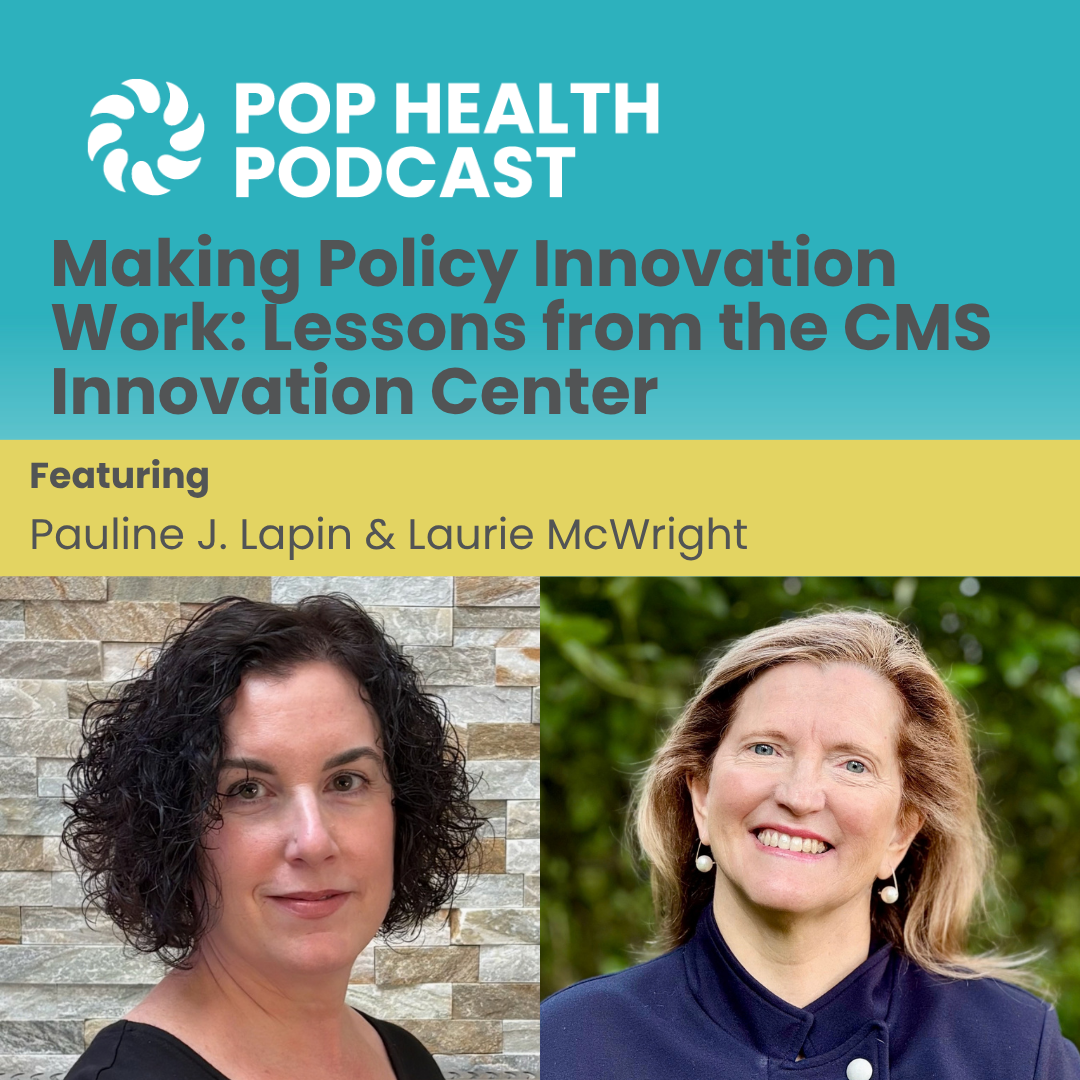
Pop Health Podcast
Making Policy Innovation Work: Lessons from the CMS Innovation Center
Policy innovation requires more than a strong idea. It depends on the people, culture, and operational discipline needed to turn that idea into something that can work in practice. Pauline J. Lapin and Laurie McWright, former leaders at the Center for Medicare and Medicaid Innovation within the Centers for Medicare & Medicaid Services, join Coral Partner Kate Freeman to reflect on lessons from their decades of public service and their recent Milbank Quarterly Opinion. Their conversation explores how leaders build teams that can navigate uncertainty, use data and stakeholder feedback without losing objectivity, align policy design with operational realities, and sustain trust and mission alignment as priorities evolve.